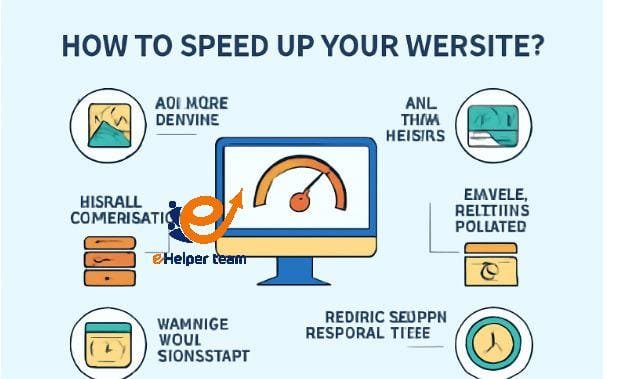
How to speed up your website ? Part 1
In today’s digital world, your website’s loading speed can make or break your online success. A fast website keeps visitors engaged, improves SEO performance, and builds trust. On the other hand, a slow site drives users away and lowers your ranking on search engines.
In fact, studies show that a 1-second delay in page loading time can reduce conversions by up to 20%. Whether you run an e-commerce store, a blog, or a corporate site, speed is now a critical ranking factor.
According to How to speed up your website, optimizing performance isn’t just about technology — it’s about user satisfaction. When visitors land on your site, they expect it to load instantly. If it doesn’t, they’ll likely move on to a competitor.
This article explores why speed up your website matters, the key causes of slowness, and practical steps you can take to improve your site’s performance in 2025.
Why Website Speed Matters in 2025
Website speed up your website plays a major role in SEO, user experience, and business performance. In 2025, Google’s Core Web Vitals will remain at the heart of ranking algorithms, measuring how quickly a page loads, responds, and remains visually stable.
A fast-loading website improves engagement, keeps users browsing longer, and increases the chance of conversion. Meanwhile, a slow site damages credibility, frustrates users, and hurts rankings.
How Speed Impacts Performance
Bounce Rate: Visitors leave if pages take more than 3 seconds to load.
Conversions: Each second of delay can significantly reduce sales.
SEO Ranking: Search engines reward faster, mobile-optimized sites.
Google has confirmed that mobile performance is now essential. According to Page Speed Mobile Factor Google search, even small delays in mobile loading time can affect your visibility in search results.
Simply put, faster websites get more traffic, better rankings, and higher revenue.
Key Factors Affecting Website Speed
Understanding what slows your website is the first step toward fixing it. The most common culprits behind slow websites include unoptimized images, bloated code, and inefficient servers.
Here are the top factors that impact page loading speed:
Large Media Files: Oversized images and videos are the most common reason for slow pages.
Unoptimized Code: Too much CSS or JavaScript delays rendering.
Slow Hosting Servers: A weak server setup can increase load times even with lightweight pages.
Too Many HTTP Requests: Each file on a page (CSS, JS, images) requires a separate request.
Lack of Caching or CDN: Without caching, the browser must reload resources every time.
For deeper insights, check out the best page speed test tools listed by eHelperTeam. These tools—like GTmetrix, Pingdom, and Google PageSpeed Insights—help identify which elements are slowing down your website.
Once you identify bottlenecks, you can focus on targeted fixes for maximum improvement.
Proven Techniques to Speed Up Your Website
speed up your website optimization doesn’t require a complete website overhaul. By applying a few proven techniques, you can significantly improve performance.
1. Choose a High-Performance Hosting Provider
Your hosting service forms the backbone of your website’s Core Web Vitals are a set of metrics introduced by Google to measure the user experience of a website. They focus on loading speed, interactivity, and visual stability.. Choose a provider that offers SSD storage, fast server response times, and global CDN coverage. The closer the data center to your target audience, the faster your pages load.
2. Minify and Combine Your Files
Minifying HTML, CSS, and JavaScript removes unnecessary spaces, comments, and line breaks, making files smaller. Tools like Autoptimize or Minify CSS/JS can help automate this. Combining multiple scripts into one also reduces the number of HTTP requests.
3. Optimize Your Database and Plugins
Regularly clean your CMS database and remove unused plugins. WordPress users can use tools like WP-Optimize or LiteSpeed Cache for easy cleanup.
4. Enable GZIP Compression
GZIP reduces file sizes before sending them to the browser, making your site load faster without reducing quality.
5. Use Lazy Loading for Media
Lazy loading delays the loading of images and videos until they’re visible on the screen. This saves bandwidth and improves the user experience.
You can also improve performance through proper image compression. According to The Power of Image Compression, reducing image sizes can drastically enhance both loading speed and SEO performance.
6. Keep Monitoring Performance
After implementing these techniques, keep tracking your site’s speed regularly. Performance optimization isn’t a one-time job; it’s a continuous process that evolves with web technologies and user expectations.
Optimizing Images and Media for Faster Load Times
Images and media files like videos are often the largest elements on a webpage. Without optimization, they can dramatically slow down your website. In fact, unoptimized images are one of the primary culprits when it comes to slow-loading pages.
Image Compression and Format Choice
The key to speeding up your website is image compression. Using high-quality images is essential for user experience, but large files can significantly increase load time.
JPEG is generally the best format for photographs, as it provides a good balance between quality and file size.
PNG is ideal for images with transparent backgrounds or for simpler graphics like icons.
WebP is a modern image format that offers superior compression and quality, making it ideal for faster web pages.
You can compress images using tools like TinyPNG, ImageOptim, or Squoosh to reduce file sizes without sacrificing quality.
Additionally, make sure to implement responsive images that load different sizes based on the visitor’s screen resolution. This reduces unnecessary data transfer, especially on mobile devices. Responsive images help optimize your website’s performance by ensuring that images are appropriately sized for both desktop and mobile users, improving page load times and mobile SEO.
For more details, check out the article on The Power of Image Compression to understand how it boosts both website performance and SEO.

Video Optimization
To speed up your website, consider implementing various optimization strategies such as compressing images, minifying code, and using a content delivery network (CDN). These techniques not only improve website performance but also enhance user experience, ensuring that your site loads faster, especially on mobile devices.
For faster loading, always use the lazy loading technique for videos, which ensures they only load when they appear on the user’s screen.
Leveraging Browser Caching and CDN for Faster Content Delivery
Another effective strategy for improving website speed is to utilize browser caching and a Content Delivery Network (CDN). These tools help ensure that your website loads faster for returning visitors and reduce the load on your server.
- Browser Caching
When a user visits your website, their browser stores certain elements of the site (like images, CSS, and JavaScript) in its cache. This allows the browser to load those elements more quickly on subsequent visits. By setting proper expiration dates for cached elements, you can ensure that visitors won’t need to reload your entire website each time they come back.
To configure caching, you can modify your .htaccess file or use caching plugins if you’re on a platform like WordPress.
- Content Delivery Network (CDN)
A CDN stores cached versions of your website on multiple servers around the world, and it delivers content from the server closest to the visitor. This minimizes latency and accelerates the loading time, especially for international visitors.
Popular CDN services include Cloudflare, Amazon CloudFront, and KeyCDN.
By combining browser caching and a CDN, you can ensure your site is faster no matter where your users are located.
Monitoring and Testing Website Speed Regularly
Once you’ve implemented speed optimization strategies, it’s crucial to monitor and test your website’s speed regularly to ensure consistent performance.
Speed up your website. You should periodically run tests using Google PageSpeed Insights, GTmetrix, and Pingdom to evaluate how well your website performs and identify any issues that need addressing.
These tools offer detailed reports on your site’s Core Web Vitals and provide actionable suggestions on how to improve speed.
Additionally, make sure to test the website’s mobile performance, as mobile users are likely to experience slower loading speeds due to varied network conditions. Check out Page Speed Mobile Factor Google search to understand why this is critical for your rankings.
Frequently Asked Questions (FAQs) About Website Speed Optimization
What is the most important factor for improving the speed of your website?
The most important factor is optimizing images and reducing their file sizes. This has the most significant impact on load times.How do I check my website’s speed?
You can use tools like Google Page Speed up your website, GTmetrix, or Pingdom to test your site’s loading speed and get a detailed analysis of performance.What is lazy loading, and how does it help?
Lazy loading is a technique where images and videos are only loaded when they are about to appear on the user’s screen. This reduces initial load times and saves bandwidth.How does server location affect website speed?
The closer your server is to the user, the faster your website will load. This is why using a CDN with multiple global servers is recommended.What are Core Web Vitals?
Core Web Vitals are a set of metrics introduced by Google to measure the user experience of a website. They focus on loading speed, interactivity, and visual stability.What’s the best way to compress images for the web?
Use tools like TinyPNG or ImageOptim to compress images without losing quality. Always choose the right format (JPEG for photos, PNG for graphics).Why is mobile speed optimization important?
Mobile devices now account for most web traffic, and Google prioritizes mobile-first indexing. Optimizing your mobile version ensures better rankings and user satisfaction.How can caching improve website speed?
Caching stores certain website elements in the user’s browser so they don’t have to reload with each visit, making subsequent visits faster.What are the best practices for optimizing JavaScript and CSS files?
Minify your JavaScript and CSS files by removing unnecessary spaces and comments. Combine files to reduce HTTP requests and improve loading times.How often should I test my website’s speed?
It’s recommended to test your site’s speed at least once a month, or after significant changes to the website, such as adding new features or content.
Conclusion
Optimizing your website’s speed up your website that requires regular monitoring, testing, and applying the best practices for performance enhancement. By following the techniques outlined in this guide — from optimizing images and utilizing CDNs to leveraging browser caching — you can ensure that your website loads faster, provides a better user experience, and performs better in search rankings.
Remember, website speed doesn’t just help you rank higher on Google; it also improves the user experience and increases conversion rates. Implement these strategies today and enjoy a faster, more efficient website tomorrow!